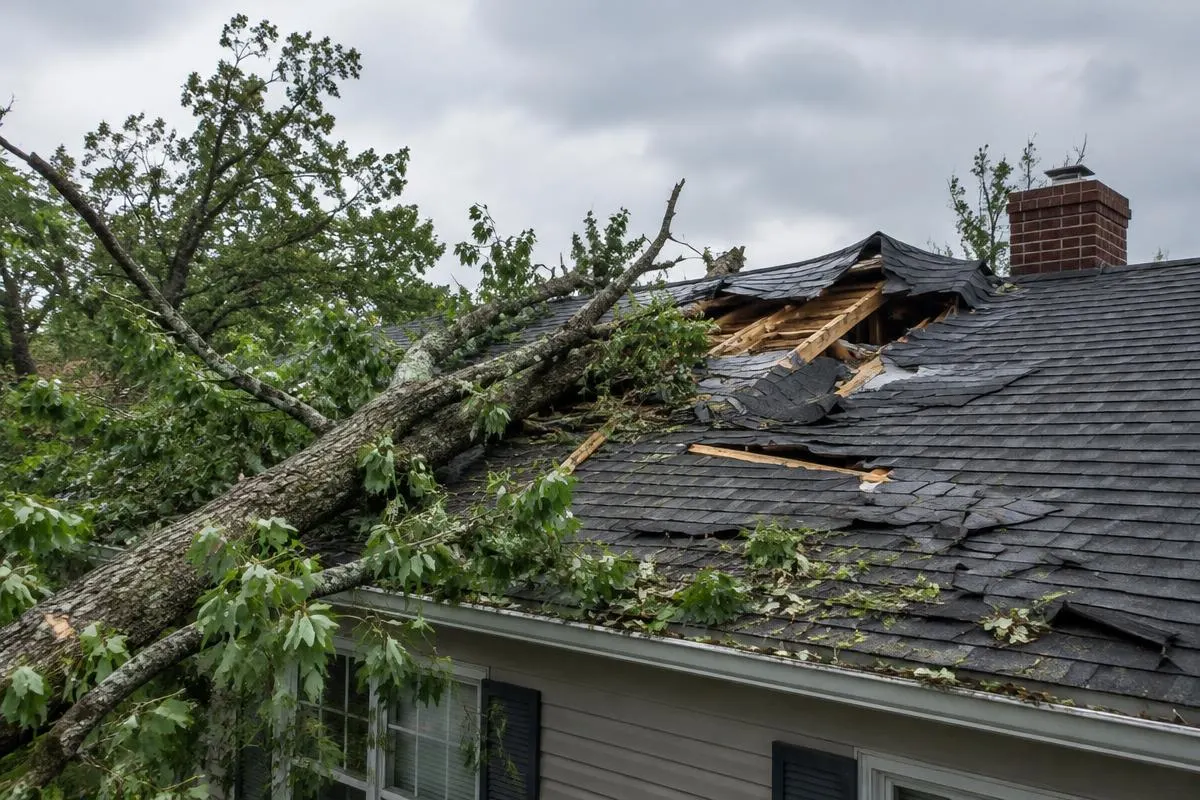
Long Island sees nor'easters, summer thunderstorms and the occasional tropical system. High winds lift and tear shingles, heavy rain finds weak flashing, and trees drop limbs onto roofs. John Expert Roofer responds to storm damage by assessing the roof, protecting exposed areas and then completing permanent repairs.
For a step-by-step homeowner checklist, read what to do after storm damage to your roof.
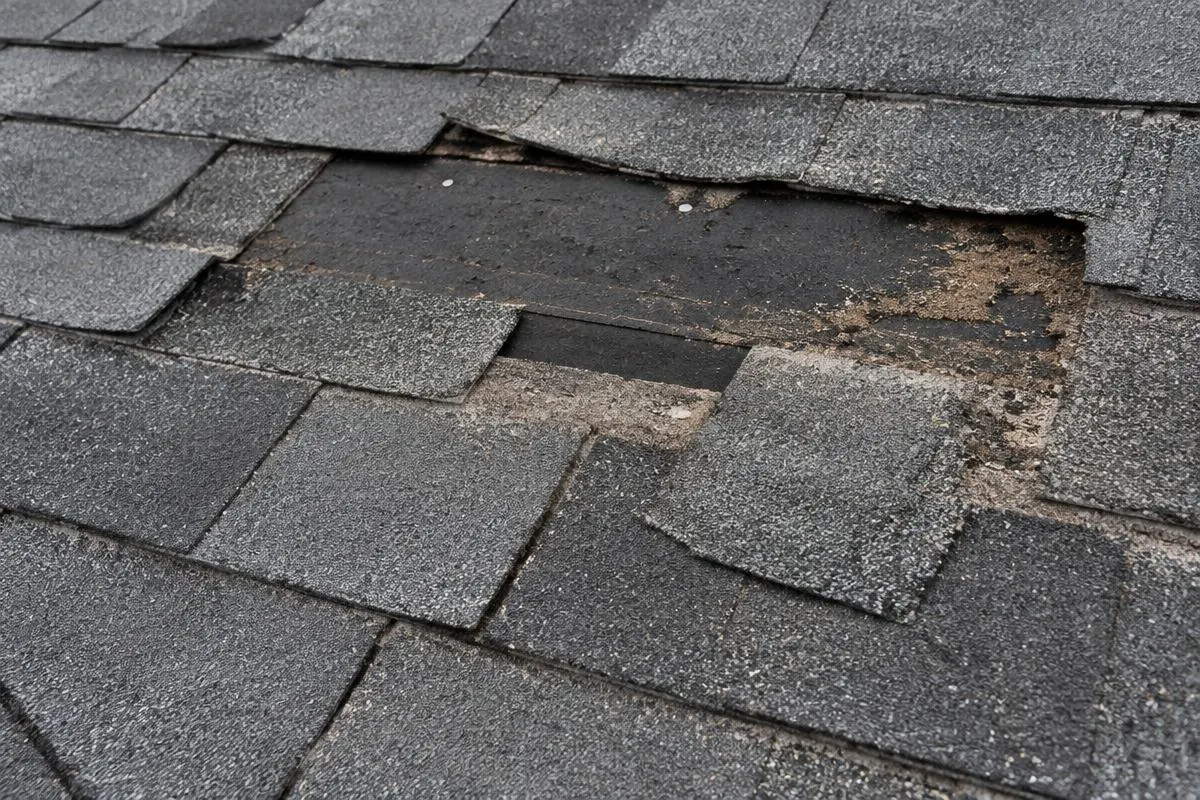
Types of Storm Damage We Repair
Storm damage takes many forms:
- Shingles lifted, creased or blown off by wind
- Punctures and broken decking from fallen branches
- Damaged ridge caps, flashing and vents
- Gutters pulled away from fascia
- Leaks caused by wind-driven rain
Temporary Protection First
When a roof is opened up by storm damage, temporary protection such as tarping can limit water entry until permanent repairs are possible. We assess what is needed to protect your home in the short term and then plan the lasting fix.
Documentation for Your Records
If you plan to contact your insurance company, clear documentation helps. We can photograph the damage we find and explain it in plain terms. Coverage decisions are made by your insurer, so we recommend contacting them directly about your policy.
Permanent Repairs or Replacement
Some storms damage only a few shingles, which a standard roof repair handles. Severe damage across a roof, especially an older one, may make roof replacement the better choice. We explain the options honestly. If water already got inside, our roof leak repair process helps confirm every entry point is sealed.