Published October 21, 2026 · By John Expert Roofer
Your roof works quietly until something goes wrong, and by the time water drips onto a bedroom floor, the underlying problem has often been developing for months. Homes in Roslyn face a full range of weather: humid summers, heavy rain, coastal wind and winter freeze-thaw cycles. Each season puts stress on shingles, flashing and the decking underneath.
The good news is that most roofs give warning signs well before a serious failure. Learning to recognize them helps you schedule a roof repair while the fix is still simple. Below are the signs we recommend homeowners watch for, both from the ground outside and from inside the house.
Missing, Lifted or Damaged Shingles
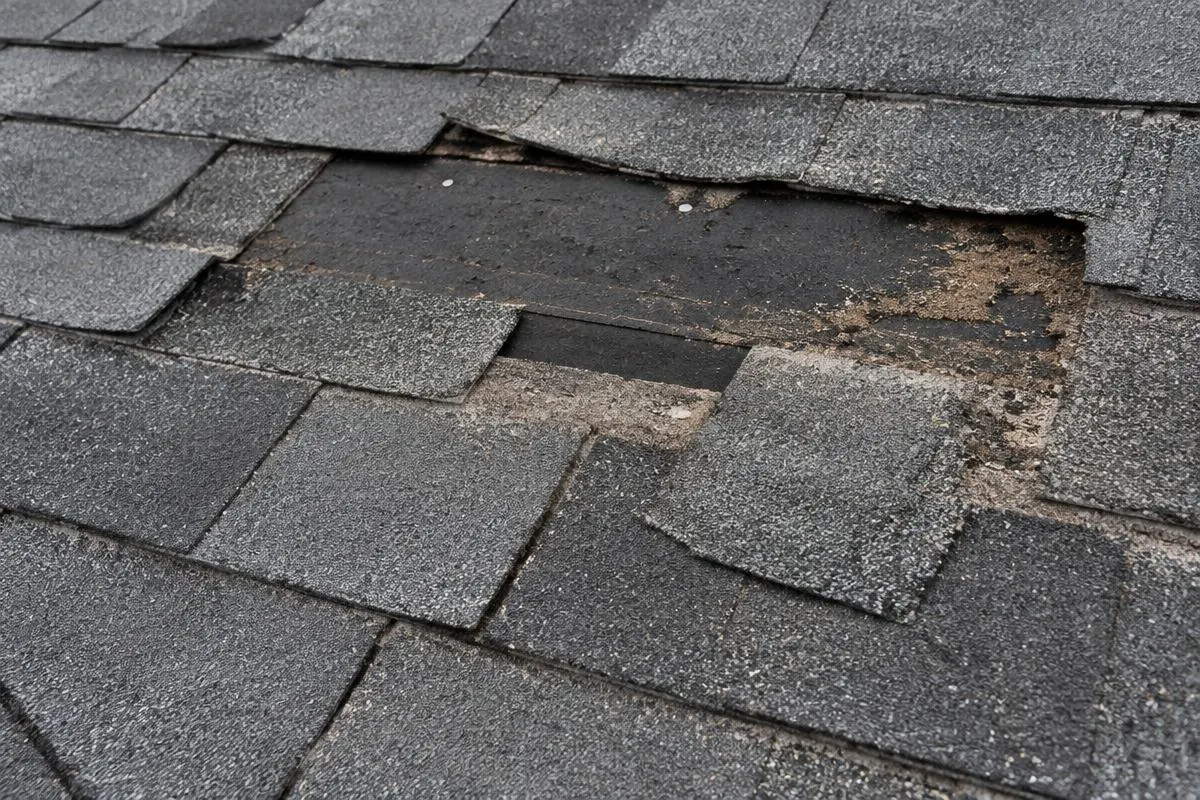
Stand across the street and look at your roof in good light. Shingles should lie flat in straight, even rows. Gaps where shingles are missing, edges that lift or flap in the wind, and shingles that look creased or bent all indicate wind damage or broken seal strips. Once a shingle loses its seal, the next strong wind can tear it off entirely.
Curling and cupping, where the edges turn up or the middle sinks, usually point to aging or poor attic ventilation. A few curled shingles may be repairable, but curling across whole slopes often means the roof is reaching the end of its life.
Granules in Your Gutters
Asphalt shingles are coated with mineral granules that protect the asphalt from sunlight. Over time, those granules wear loose and wash into gutters and downspouts. Finding a sandy, gritty buildup when you clean gutters is a sign of wear. Some loss is normal on a brand-new roof, but heavy accumulation on an older roof or visible bald spots on the shingles indicate the material is breaking down.
Without granules, shingles age faster, become brittle and are more prone to cracking. That accelerates every other problem on this list.
Stains on Ceilings and Walls
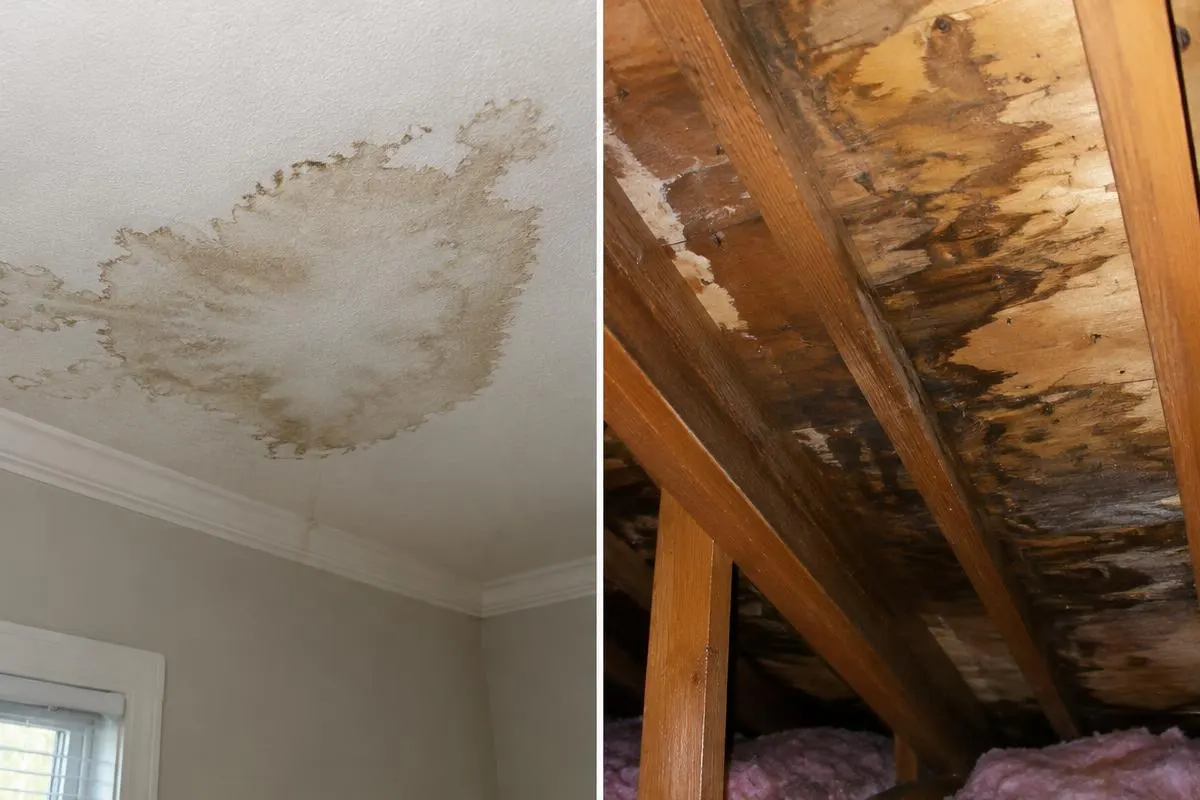
Brown or yellow rings on a ceiling, peeling paint near the top of a wall, or bubbling drywall all suggest water is getting in. Remember that water travels. A stain in the middle of a room may come from flashing several feet away. That is why tracing the source matters more than patching the stain, which is the focus of our roof leak repair service.
Check closets and rooms you do not use often, especially on the top floor. These spaces can hide early leaks for a long time.
Clues in the Attic
If you can safely access your attic, bring a flashlight on a sunny day and again after a rain. Look for daylight showing through roof boards, damp or darkened wood, water trails along rafters, and compressed or stained insulation. A musty smell or visible mold can indicate a slow leak or poor ventilation that traps moisture.
Also notice the temperature. An attic that is extremely hot in summer or shows frost on the underside of the roof in winter may have ventilation issues that shorten the life of your shingles.
Damaged Flashing Around Chimneys and Vents
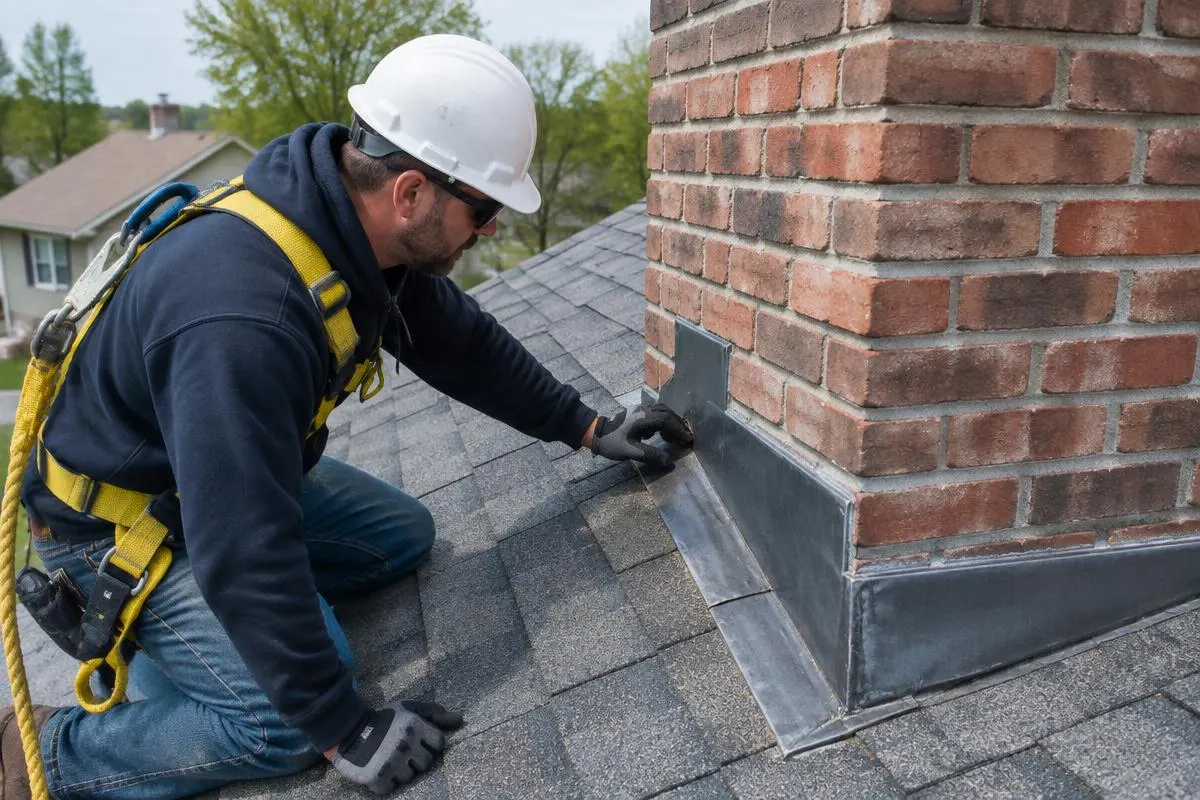
Flashing is the metal or membrane material that seals joints where the roof meets chimneys, walls, skylights and vent pipes. These are the most common leak points on any roof. From the ground, look for flashing that appears bent, rusted, separated from the brick or covered in thick layers of caulk, which often signals past improvised repairs.
Rubber boots around plumbing vents also crack with sun exposure. A cracked boot lets water run straight down the pipe into the house.
Sagging or Soft Areas
A roofline that dips or sags is a serious concern. It may mean the decking has been weakened by long-term moisture or that the structure is carrying more weight than intended. This is not something to monitor and wait on. Have it inspected promptly.
Similarly, if a roofer or contractor has mentioned soft spots underfoot, the plywood or boards beneath the shingles may be deteriorating.
Deciding What Comes Next
One sign on its own often means a targeted repair. Several signs together, especially on a roof that has been in place many years, may point toward replacement. Our guide on roof repair vs. roof replacement walks through how to weigh the decision, and our residential roofing page explains how we work with homeowners in Roslyn.
Whatever you notice, an inspection gives you a clear picture so you are not guessing.